In an industry known for hard hats and heavy machinery, the Internet of Things (IoT) is shaking things up—literally and figuratively. Imagine a construction site where your tools can chat, your materials can report for duty, and your workers can dodge accidents like they’re in a video game. Sounds futuristic? Welcome to the present!
Overview of IoT in Construction
IoT technology significantly influences the construction industry, introducing smarter ways to enhance efficiency and safety. This innovation transforms traditional processes through real-time data collection and communication.
Definition and Importance
IoT in construction refers to interconnected devices and systems that facilitate data exchange across various site elements. Tracking material usage and equipment performance improves project management and reduces waste. By integrating IoT, construction firms enhance productivity and safety, ensuring projects remain on schedule and within budget. Data-driven insights allow teams to identify risks and make informed decisions, resulting in better overall outcomes for stakeholders.
Current Trends
Several key trends highlight IoT’s growth in construction. Automation through smart machinery gains traction, allowing for remote operations and reduced manual tasks. Wearable technology, such as smart helmets and vests, monitors workers’ health and safety conditions in real time. Sensors embedded in concrete and other materials provide critical updates on structural integrity. Additionally, drone technology increasingly surveys sites, streamlining inspections and providing visual data analytics. Each trend reflects a larger shift towards data integration, safety enhancement, and operational efficiency within the construction landscape.
Key Benefits of IoT in Construction
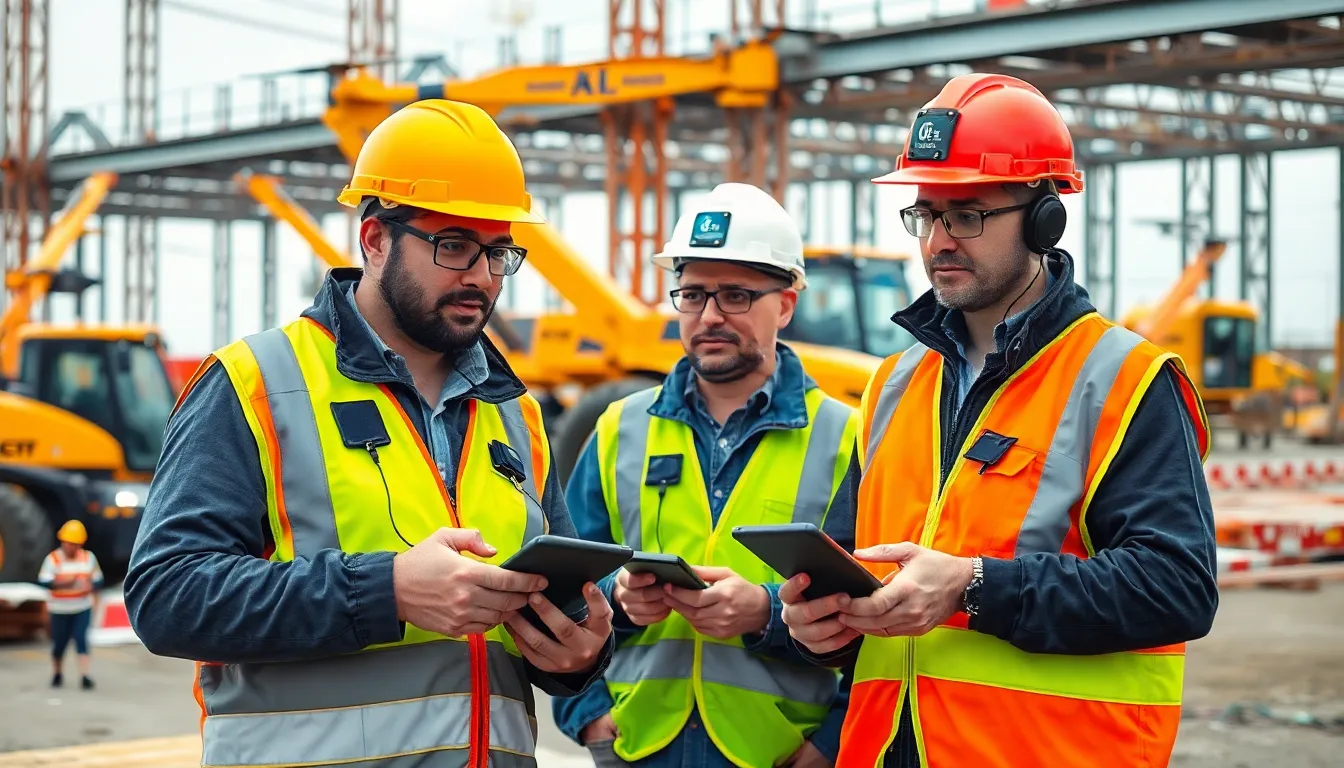
IoT technology brings numerous advantages to the construction industry, enhancing safety and boosting efficiency. By connecting devices and systems, firms can achieve significant improvements in their operations.
Enhanced Safety Measures
Sensors monitor equipment and worker conditions in real-time, significantly reducing the risk of accidents. Wearable devices track workers’ health metrics, alerting teams to potential hazards before incidents occur. Remote monitoring ensures immediate alerts for structural integrity issues, facilitating quicker responses. Data analytics identify trends in workplace safety, enabling proactive risk management. Communication tools streamline information sharing among teams, fostering a culture of safety on-site.
Improved Efficiency and Productivity
IoT facilitates inventory tracking, minimizing delays and waste on construction projects. Smart machinery automates repetitive tasks, allowing workers to focus on higher-value activities. Real-time updates from connected tools optimize scheduling and resource allocation, enhancing overall project delivery. Drones provide aerial views, improving site inspections and enabling better planning. Predictive maintenance alerts prevent equipment failures, ensuring operations remain uninterrupted and efficient.
Challenges Facing IoT Implementation
Implementing IoT in construction presents several challenges that firms must address to fully leverage its potential.
Data Security Concerns
Data security poses a significant challenge for construction firms adopting IoT solutions. Protecting sensitive information from cybersecurity threats becomes essential as connected devices proliferate. Breaches can lead to unauthorized access to confidential project details or equipment data. Firms must employ robust encryption methods and develop comprehensive security protocols. Regular security audits further enhance safeguards, ensuring the resilience of IoT networks. Training employees on security best practices empowers them to recognize potential threats, minimizing risks associated with data transmission. Strong security measures contribute to building trust among stakeholders who rely on accurate and secure information.
Integration with Existing Systems
Integrating IoT technology with existing systems proves challenging for many construction companies. Legacy systems may lack compatibility with new IoT applications, hindering seamless data exchange. Identifying the right IoT solutions that fit into current workflows is critical for successful implementation. Transitioning to an IoT framework often requires substantial investment in infrastructure and training. Working with technology partners who understand both IoT capabilities and the construction industry can facilitate smoother integration. Creating a clear roadmap for merging IoT with existing operations enhances overall efficiency, enabling teams to realize the full benefits of IoT systems.
Future of IoT in Construction
The future of IoT in construction showcases advancements that promise to further transform the industry. With ongoing developments in sensor technology and artificial intelligence, construction sites will become even smarter and more automated.
Innovations on the Horizon
Wearable technology will evolve, enabling real-time health and safety monitoring. Innovations in drones will enhance site inspections through aerial data collection. IoT will also facilitate autonomous vehicles for material transportation, reducing labor costs. Advanced robotics, enabled by IoT, will undertake complex tasks in challenging environments. Building Information Modeling (BIM) integration with IoT systems will lead to improved project visibility and collaboration. These innovations pave the way for optimized workflows and enhanced decision-making across projects.
Potential Impact on the Industry
Significant impacts on project delivery and safety standards can be expected. Enhanced data analytics will foster proactive maintenance strategies, minimizing downtime and repair costs. Real-time connectivity among teams will improve communication, ensuring timely responses to emerging challenges. Supply chain management will benefit from IoT, reducing material waste and lowering procurement costs. Sustainability will see strides as IoT enables smarter resource management, contributing to environmental goals. Collectively, these advancements will drive efficiency, safety, and profitability, reshaping the construction landscape for the better.
The integration of IoT in construction is paving the way for a more efficient and safer industry. As technology continues to evolve, the benefits of real-time data collection and communication will only grow. Firms that embrace these advancements will not only enhance their operational capabilities but also position themselves for future success.
Addressing the challenges of data security and system integration will be crucial for maximizing IoT’s potential. With ongoing innovations like smarter sensors and AI-driven solutions, the construction landscape is set to undergo a significant transformation. By prioritizing these developments, companies can improve project delivery and elevate safety standards, ultimately leading to a more productive and profitable future.