In a world where your fridge can text you when you’re out of milk, the Internet of Things (IoT) is no longer just a futuristic dream—it’s a reality. As devices multiply and communicate, the integration of IoT with cloud technology is the secret sauce that turns simple gadgets into smart companions. Imagine a symphony of devices working together seamlessly, making life easier and more efficient.
Overview of IoT and Cloud Integration
IoT devices rely heavily on cloud integration to function effectively. These devices collect vast amounts of data, which the cloud stores and processes. Real-time data analytics becomes feasible as devices communicate with cloud platforms, enhancing operational efficiency.
Manufacturers utilize cloud services to push software updates to IoT devices seamlessly. Performing over-the-air updates minimizes downtime for users and ensures devices remain secure and up-to-date. Effectiveness increases when devices operate with the latest features and security patches.
Security remains a significant concern. Integrating robust cloud security protocols protects sensitive data captured by IoT devices. Methods like encryption and access controls help secure this information during transmission and storage.
Data interoperability stands out as a crucial aspect of IoT and cloud integration. Devices from various manufacturers can share information and function together smoothly. Protocols such as MQTT and CoAP enable this communication, fostering collaboration across platforms.
Scalability is another primary benefit of cloud integration for IoT systems. A cloud-based infrastructure can grow alongside an expanding IoT network, accommodating increased data flow and additional devices. This flexibility is particularly vital for businesses aiming to expand their operations without compromising performance.
Cost-efficiency emerges as a key advantage as well. Utilizing cloud services reduces the need for physical infrastructure and minimizes maintenance costs. Organizations can focus their resources on other critical areas while still accessing the latest technology.
Integration leads to enhanced user experiences. Smart homes benefit from interconnected devices that work together, providing convenience and energy efficiency. When users can control multiple devices via a single interface, life becomes noticeably more manageable.
Benefits of IoT and Cloud Integration
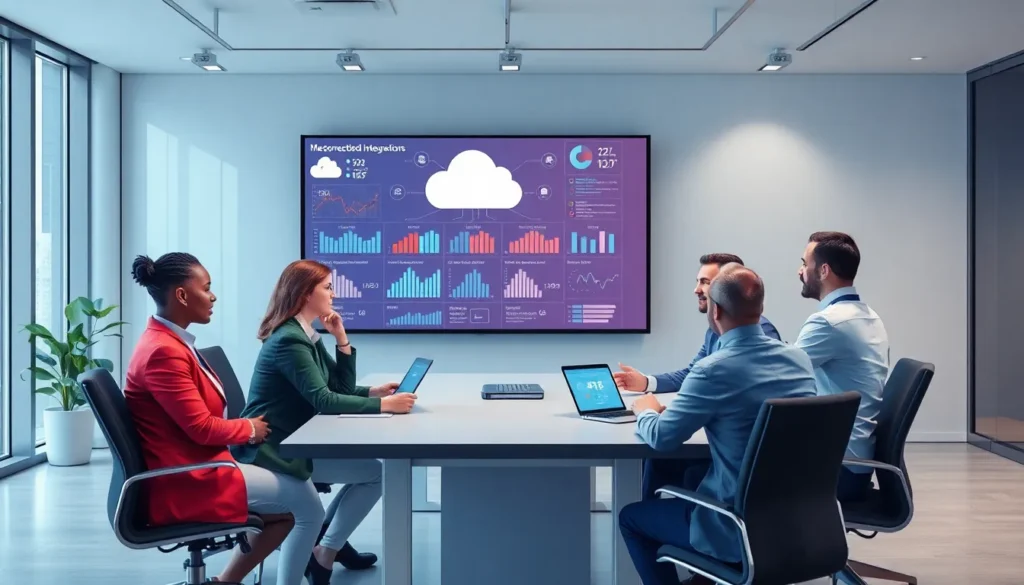
IoT and cloud integration offers several advantages that significantly enhance device functionality.
Cost Efficiency
Cost efficiency emerges as a primary benefit of IoT and cloud integration. Reducing the need for extensive physical infrastructure results in lower upfront investments. Maintenance expenses decline since cloud services manage software updates and security enhancements. Organizations can allocate resources more effectively by adopting a pay-as-you-go model for cloud services. This flexibility allows companies to scale their spending based on actual usage, optimizing operational costs over time.
Scalability
Scalability plays a vital role in cloud integration, supporting IoT system expansion. Businesses can easily add new devices without overhauling existing infrastructure. Cloud platforms adapt readily to increased data volume as additional devices connect. Organizations experience seamless integration, allowing them to maintain performance levels despite growth. Such adaptability proves crucial for businesses looking to evolve alongside evolving market demands.
Enhanced Data Analysis
Enhanced data analysis capabilities stand out in the context of IoT and cloud integration. Cloud platforms process vast amounts of data in real time, leading to insightful analytics. Businesses gain valuable information that informs decision-making and improves efficiency. Advanced algorithms and machine learning techniques enable predictive analytics, allowing organizations to anticipate trends and user preferences. Ultimately, this powerful combination enhances operational effectiveness and drives innovation.
Challenges in IoT and Cloud Integration
Integration of IoT with cloud technology presents various challenges that organizations must address for successful implementation.
Security Concerns
Security stands as a primary challenge. Many IoT devices transmit sensitive data, making them prime targets for cyberattacks. Encryption plays a crucial role in securing this data during transmission and storage. Access controls also help limit unauthorized usage. Additionally, organizations must consistently update security protocols to guard against emerging threats. Without robust security measures, companies risk data breaches that can compromise user trust and lead to significant financial losses.
Connectivity Issues
Connectivity issues frequently arise in IoT and cloud integration. Reliable internet access is vital for seamless communication between devices and cloud platforms. Intermittent connectivity can disrupt data transfer and hinder real-time analytics. Latency problems may also impact device responsiveness. Organizations need to assess network coverage and invest in strong infrastructure to mitigate these challenges. Without stable connectivity, the efficiency of IoT systems diminishes, affecting overall performance.
Data Management
Data management represents another significant challenge. IoT devices generate large volumes of data that require effective storage and processing solutions. Inefficient data handling can lead to latency and inaccuracies in decision-making. Organizations must implement advanced data analytics tools to glean meaningful insights from this information. Developing standardized protocols for data formats enhances interoperability among devices. Poor data management may prevent businesses from maximizing the benefits of IoT and cloud integration, limiting operational efficiency.
Case Studies of Successful IoT and Cloud Integration
Numerous organizations have successfully integrated IoT with cloud technology, showcasing the potential of these systems. General Electric (GE) exemplifies this integration by utilizing IoT for predictive maintenance in their wind turbines. By collecting data from sensors, they transmit insights to the cloud, enabling real-time analysis and reducing operational downtime by up to 10%.
In the healthcare sector, Philips has transformed patient care with IoT-enabled devices connected to the cloud. Their remote monitoring systems allow healthcare providers to track patient vital signs in real time, leading to a 25% decrease in hospital readmissions through timely interventions.
Smart home technology also benefits from cloud integration. Nest, a subsidiary of Google, enhances user convenience by connecting home devices, like thermostats and smoke detectors, to the cloud. This integration allows users to control their home environment from mobile devices, increasing energy efficiency by approximately 30%.
The automotive industry also showcases successful implementations. Tesla utilizes cloud-connected IoT devices in its vehicles to deliver over-the-air software updates. This innovative approach minimizes the need for physical visits to service centers, improving customer satisfaction while keeping vehicle systems up-to-date.
Logistics companies leverage IoT and cloud integration for inventory management. Amazon employs connected devices to track shipments and optimize supply chain operations. These methods enhance accuracy in order fulfillment and improve delivery times significantly.
Finally, agriculture benefits from this integration through precision farming. John Deere utilizes connected sensors and cloud analytics to monitor soil conditions and crop health. This data-driven approach results in increased yields and more efficient resource usage, transforming traditional farming practices.
Future Trends in IoT and Cloud Integration
Emerging technologies are shaping the future of IoT and cloud integration. Artificial intelligence (AI) is increasingly incorporated into cloud platforms, enhancing decision-making through predictive analytics. Organizations adopt machine learning algorithms to analyze IoT data, resulting in improved operational efficiency and risk management.
5G technology is another key trend impacting this integration. Faster connectivity enables real-time data processing and seamless communication among devices. With increased bandwidth, IoT devices can transmit larger data volumes, facilitating advanced applications in various sectors.
Edge computing is gaining traction within IoT environments. By processing data closer to where it is generated, organizations can reduce latency and enhance performance. This approach allows for optimized bandwidth utilization, crucial for time-sensitive applications like autonomous vehicles.
Cybersecurity measures continue to evolve as integration increases. Organizations invest in advanced encryption methods and AI-driven security solutions to protect sensitive data. Their focus on proactive security strategies minimizes risks associated with data breaches.
Interoperability remains essential for successful IoT and cloud integration. The development of standardized protocols enables devices from different manufacturers to communicate effectively. Harmonized data sharing leads to improved user experiences across smart home systems and industrial applications.
Sustainability becomes a priority as environmental concerns grow. IoT and cloud integration promotes energy efficiency and resource optimization in various industries. Utilizing smart technologies, organizations can monitor and reduce their carbon footprints, contributing to global sustainability efforts.
Finally, the role of digital twins is expanding in IoT applications. Organizations create virtual replicas of physical devices to simulate performance and identify potential issues. This proactive approach enhances maintenance strategies and contributes to overall system reliability.
The integration of IoT and cloud technology is transforming how devices interact and function in daily life. This synergy not only enhances efficiency and convenience but also drives innovation across various sectors. Organizations that embrace this integration can leverage real-time data analytics and scalable solutions to optimize operations and reduce costs.
However, as the landscape evolves, addressing security concerns and ensuring robust data management will be critical. By investing in advanced technology and maintaining interoperability standards, businesses can harness the full potential of IoT and cloud integration. The future promises even greater advancements, making it essential for organizations to stay ahead of the curve in this dynamic environment.